 ES
ES

SAGSE South America 2026
ALASCA: Integration, Standards, and a Regional Vision for the Future of Gaming in Latin America
March 18 & 19, 2026 at the Hilton Buenos Aires Hotel & Convention Center
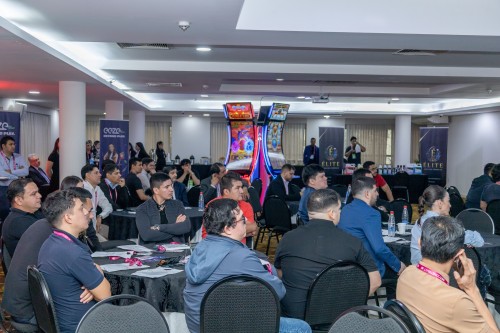
Within the framework of SAGSE South America 2026, taking place on March 18 and 19 at the Hilton Buenos Aires Hotel & Convention Center, we spoke with ALASCA about the key challenges and opportunities facing the gaming industry across the region. In a context marked by technological transformation, regulatory evolution, and increasing market integration, the association shares its strategic perspective on the present and future of the sector in Latin America, highlighting the importance of collaboration, professionalization, and international cooperation.
In casino security across LATAM, what is the “silent risk” that is growing the most without being properly measured by the sector (internal fraud, cyber risk, collusion, minors, AML), and what minimum standard should already be adopted to stop it?
I believe it is fair to say that the greatest risk and the main threat we face—and have faced for years—is directly related to electronic fraud in our slot operations. We have observed how organized groups of fraudsters constantly develop mechanisms to target not only a broader range of manufacturers, but also the diversity of side bets integrated into the games.
To successfully combat this, it is essential to have an effective and up-to-date slot auditing system that allows us to react immediately to any unusual activity. At the same time, it is vital that both the Surveillance department and the gaming floor staff receive ongoing training to ensure early detection of irregularities.
What concrete benefits does the ALASCA Network provide—real cases, early warnings, benchmarks, operational contacts—that a casino cannot obtain on its own? How does this networking translate into real prevention (fewer incidents, fewer losses, better compliance)?
We have undoubtedly learned that information sharing is crucial if we want to feel protected against this type of organized fraud. Over the years, we have had several examples where the exchange of information has enabled us to track groups of fraudsters as they traveled across different countries in Latin America with the sole purpose of committing fraud in casinos. I know for a fact that many ALASCA members have avoided becoming victims of these highly organized fraud groups thanks to our alert systems, which allowed them to be prepared upon the perpetrators’ arrival.
If a casino in LATAM wants to “move up a league” in security within 90 days, what are the three non-negotiable decisions you recommend (people/processes/technology), and what common mistakes do you see repeated across the region?
If a casino in Latin America decides it wants to “move up a league” within a 90-day timeframe, based on my own experience, I recommend carefully analyzing the following three aspects:
- Training Needs Assessment and Implementation: Conduct a thorough evaluation of staff knowledge in order to identify gaps and implement the necessary training programs.
- Review and Development of Operational Procedures: Carry out a comprehensive review of existing operational procedures to update or implement them in line with industry best practices.
- Participation in Professional Networks: Ensure membership in an association such as ALASCA or another recognized professional network—not only to stay constantly informed about the movements of professional casino fraudsters and the latest methods being used, but also to exchange insights on operational procedures, CCTV and security equipment, investigative techniques, different types of analysis, and more.